
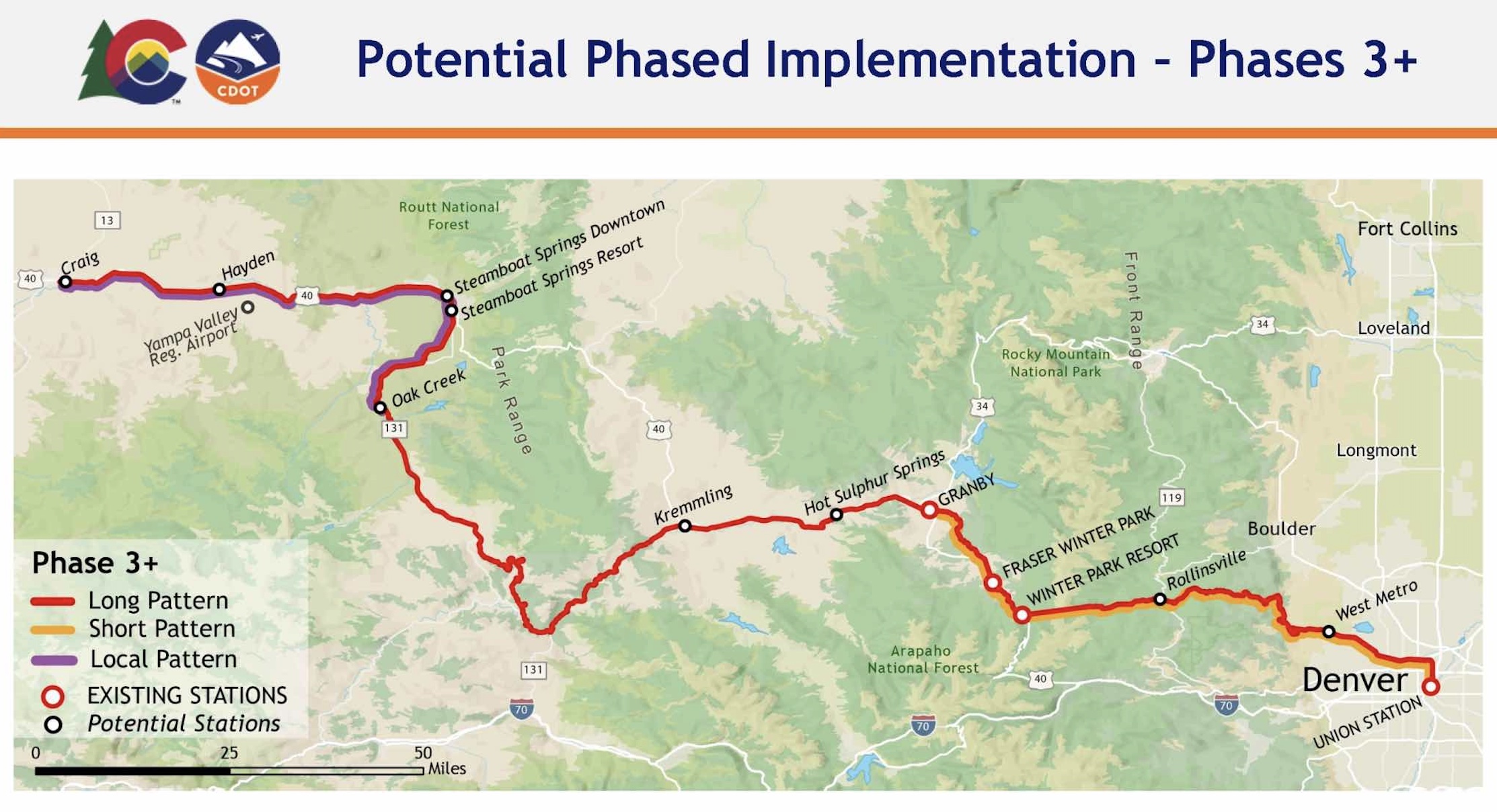
Colorado’s long-discussed Mountain Rail project is moving closer to reality, with Phase 1 service targeted to launch in late 2026. While Steamboat Springs won’t be directly connected in this first phase, the progress marks an important step toward restoring passenger rail access to Colorado’s mountain corridor. For locals, visitors, and second-home owners who regularly travel between the Front Range and the mountains, Phase 1 represents a meaningful shift in how people may move through the Rockies in the years ahead.
Here’s what Phase 1 actually looks like, what’s happening behind the scenes, and what to watch for as the project moves toward launch.
If you’re new to the Mountain Rail project, we break down the big picture – what it is, why it matters, and what it could mean for Steamboat – in our original overview here: Colorado’s Mountain Rail Is Coming: What It Means for Steamboat.
What Phase 1 Will Look Like
Phase 1 of Mountain Rail is planned to provide daily passenger rail service between Denver and Granby. This route reestablishes a consistent passenger connection through the Moffat Tunnel and along a historic rail corridor that once carried travelers deep into Colorado’s mountain communities.
For now, Granby will serve as the western endpoint, offering access to Grand County and nearby recreation areas. While this doesn’t bring trains directly to Steamboat Springs yet, it lays the foundation for future expansion and demonstrates that daily mountain passenger service is operationally possible.
Why the Moffat Tunnel Agreement Matters
One of the most important behind-the-scenes milestones is the 25-year access agreement for the Moffat Tunnel. This long-term arrangement provides passenger rail with guaranteed access through the tunnel, which is essential for any reliable mountain service.
Without this agreement, passenger trains would remain secondary to freight traffic, limiting frequency and consistency. The new access terms create the conditions needed for daily service, schedule planning, and long-term investment in passenger rail infrastructure across the mountain corridor.
Building on the Winter Park Express
Mountain Rail doesn’t start from scratch. Colorado’s existing Winter Park Express has already shown that seasonal passenger rail into the mountains can work. That service demonstrated strong demand from Front Range travelers who prefer to avoid driving I-70 on busy ski weekends.
Phase 1 builds on that proven model by expanding beyond a single resort destination and moving toward a more regular, regional passenger rail service. In many ways, Winter Park Express serves as the pilot project that helped validate interest, ridership patterns, and operational feasibility for broader mountain rail expansion.
What to Watch for Next
As Phase 1 moves closer to launch, several key developments will shape how the service ultimately functions:
Testing and operational readiness will determine schedules, travel times, and onboard experience. Contracting and service operators will finalize who runs the trains and how service is managed. Ticketing systems and pricing models will define accessibility for different types of travelers. Station planning and upgrades will impact how seamless the experience feels on both ends of the route.
These steps may not generate headlines on their own, but together they shape whether Mountain Rail becomes a truly viable alternative to driving.
What’s Still To Be Determined
While Phase 1 has clearer definition, many aspects of the broader vision remain open questions.
Timelines for Phase 2 and western expansion beyond Granby have not been finalized. Future routes that could eventually serve Northwest Colorado and Steamboat Springs are still part of longer-term planning conversations. Funding mechanisms for expansion, infrastructure upgrades, and station development will continue to evolve.
In other words, Mountain Rail is moving forward, but its ultimate reach into the Yampa Valley will depend on future phases, partnerships, and public support.
A Simple Timeline of What’s Ahead
2024–2025: Infrastructure agreements, planning, and service development
2025–2026: Testing, contracting, ticketing, and station readiness
Late 2026: Targeted launch of Phase 1 Denver ⇄ Granby daily service
Beyond 2026: Evaluation of expansion potential and future phases
Frequently Asked Questions
Will Mountain Rail Phase 1 connect directly to Steamboat Springs?
No. Mountain Rail Phase 1 is focused on Denver to Granby service. Any extension toward Steamboat Springs would come in later phases.
How often will Mountain Rail trains run?
Mountain Rail Phase 1 is planned as daily service, though final schedules will be confirmed closer to launch.
Is Mountain Rail different from the Winter Park Express?
Yes. The Winter Park Express is seasonal and destination-specific. Mountain Rail is designed to provide broader, regular passenger service through Colorado’s mountain corridor.
When will Mountain Rail tickets be available?
Mountain Rail ticketing systems and pricing structures are still being developed and will be announced closer to the Phase 1 launch.
Why is Mountain Rail Phase 1 important if it doesn’t reach Steamboat yet?
Mountain Rail Phase 1 establishes the operational framework for mountain passenger rail, creating momentum and proof of concept for future expansion west toward Steamboat Springs.
Why This Phase Still Matters for Steamboat
Even without a direct Steamboat stop, Phase 1 represents a tangible step toward a future where passenger rail once again plays a role in how people reach Colorado’s mountain communities. Each successful phase strengthens the case for continued expansion, infrastructure investment, and long-term regional connectivity.
For Northwest Colorado, the return of mountain rail isn’t just about transportation, it’s about reconnecting communities, diversifying travel options, and reimagining how people experience the journey into the mountains.
Want the Big Picture on Mountain Rail?
If you’re interested in the long-term vision for passenger rail in Northwest Colorado and what it could eventually mean for Steamboat Springs, you can read our original overview here: Colorado’s Mountain Rail Is Coming: What It Means for Steamboat.