
What You Need to Know About Deed-Restricted Homes in Steamboat Springs
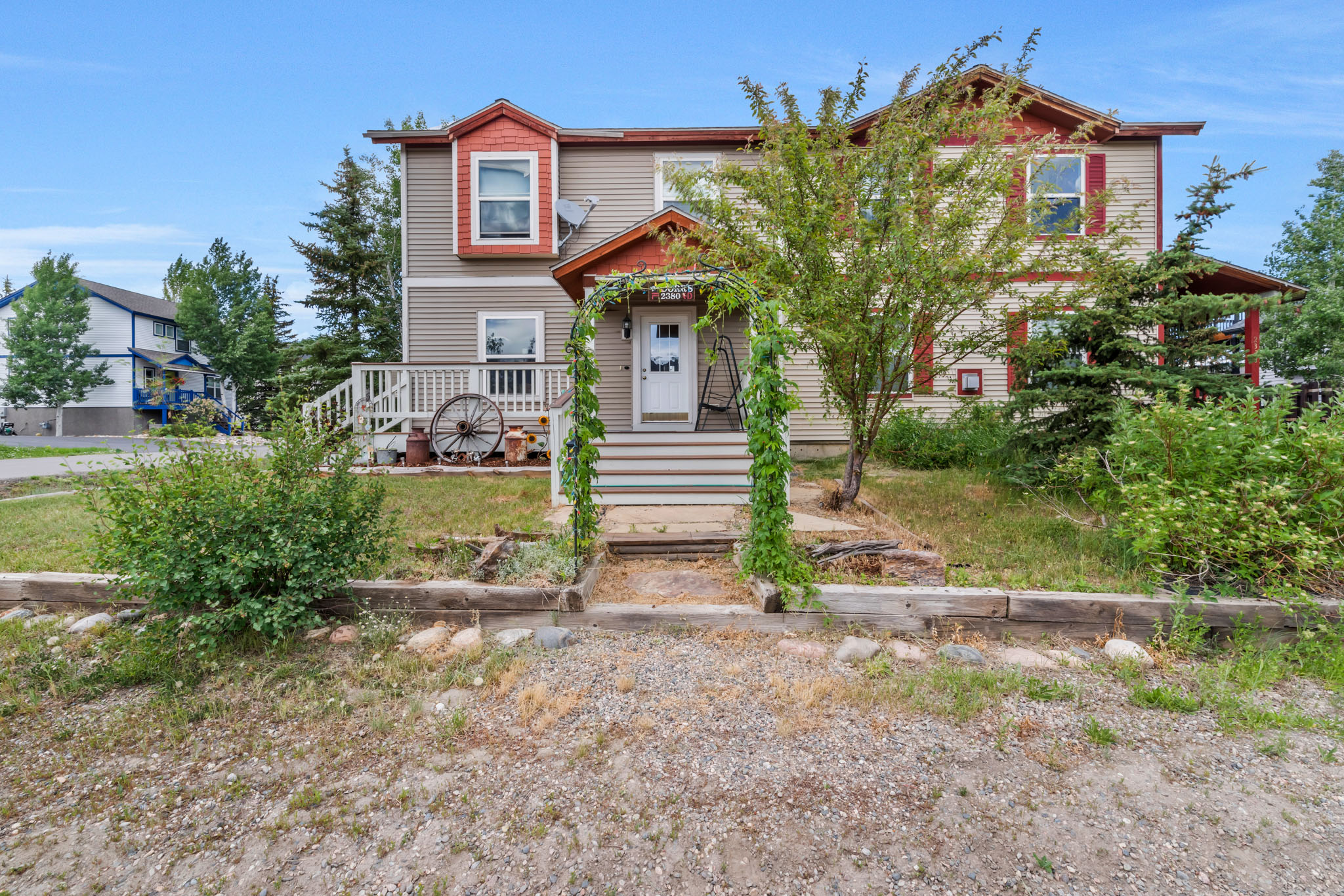
A local look at how they work – featuring 2380 Savoy Place in West End Village
Deed-restricted housing comes up often in Steamboat, especially as locals look for ways to stay in the valley while the market continues to grow. But “deed-restricted” can mean different things depending on the neighborhood, and not all restrictions work the same. With our recent listing at 2380 Savoy Place in West End Village, we’ve had a lot of people asking great questions – so here’s a clear, local guide.
What does “deed-restricted” mean in Steamboat Springs?
In Steamboat, a deed-restricted home typically means the property is reserved for full-time Routt County residents. The goal is to protect opportunities for local ownership and keep the community strong.
But there’s another layer that often comes into play: income limits tied to AMI.
AMI (Area Median Income) is a number set for our area each year that represents the middle household income. Many local housing programs use AMI to decide who can buy a home – for example, “up to 120% of AMI.” That means these homes are intentionally aimed at our local workforce, not ultra-high-income or second-home buyers.
Here’s the important part:
- Not all deed restrictions include income caps or resale formulas.
- Some do – many workforce-focused neighborhoods are both income-restricted and have appreciation caps tied to AMI.
- West End Village does not have a formal appreciation cap or preset resale formula – but buyer eligibility is still tied to local income levels.
That last point matters a lot for both buyers and sellers.
How AMI, income limits, and asset limits affect eligibility
For many deed-restricted or workforce homes, qualification isn’t just about your paycheck.
In addition to income limits based on AMI, some programs also look at your assets, including:
- Cash and investment accounts
- Ownership in other real estate (locally or elsewhere)
- Significant liquid assets beyond a certain threshold
In some cases, buyers can’t own other real estate or may be required to stay under specific asset limits to qualify. The intent is to prioritize households who genuinely need help entering or staying in the housing market – not those who already have substantial real estate or investment holdings.
Not every deed-restricted property has asset tests, and the details vary by program. But if you’re shopping in this space, it’s important to know that eligibility can be influenced by both income and assets, not just one or the other.
Can you rent out a deed-restricted home?
Most deed-restricted homes in Steamboat require owner occupancy, meaning:
 Short-term rentals (Airbnb/VRBO) are not allowed
Long-term rentals are generally not allowed unless the occupant is a qualified local worker
 Owner must live and work in Routt County full-time
This keeps the housing stock available to the local workforce, which is especially important in neighborhoods like West End Village.
How AMI and income limits affect value and appreciation
For income-restricted or workforce homes, two things typically shape long-term value:
- Appreciation caps – Some neighborhoods limit how much a home’s price can grow each year, often using a formula tied to AMI or a fixed percentage.
- Buyer pool tied to AMI – Even when there’s no formal cap, buyers still have to qualify under income guidelines. That means the future resale price is ultimately driven by what local wage-earners can afford, not by the highest bidder in an open luxury market.
So even in a strong market, appreciation on these homes is naturally tempered by the incomes of the local workforce. They’re designed to stay attainable for teachers, nurses, service workers, and other locals over time.
The role of the Yampa Valley Housing Authority (YVHA)
In Steamboat, the Yampa Valley Housing Authority (YVHA) plays a key role in making and maintaining deed-restricted and workforce housing.
At a high level, YVHA:
- Develops and manages many of the income-restricted and workforce-oriented properties in the valley
- Designs and records the deed restrictions that govern occupancy, income limits, appreciation caps, and resale procedures
- Screens and qualifies buyers based on AMI, local employment, primary residence requirements, and sometimes asset limitations
- Often oversees resales, ensuring homes go to eligible buyers and remain aligned with the original community goals
If you’re looking at a YVHA-related property, you’ll typically go through a formal qualification process with their team (or a partner) to confirm your eligibility before closing. That’s where income, asset limits, AMI bands, and local employment all get reviewed and verified.
How does a deed restriction affect resale value?
It depends on the type of restriction.
For income-restricted homes with appreciation caps, resale value is directly limited by a formula or maximum price. You don’t get full “open market” appreciation, but you gain more stability and predictability – and the next local buyer gets a realistic shot at ownership.
For neighborhoods like West End Village, where 2380 Savoy Place is located, the dynamics are a bit different:
- The restriction is based on local occupancy and income eligibility, not a preset price formula.
- There is no hard cap on appreciation written into the deed.
- However, buyers still have to meet income guidelines tied to AMI, so your pool of potential buyers will always be local wage-earners, not ultra-high-income or second-home buyers.
What that means in plain language:
- The home sells at market value within that qualified buyer pool
- Appreciation is somewhat “capped” by what local, income-qualified buyers can afford, even without a formal price ceiling
- Buyer demand stays strong because locals actively seek these properties
- Homes often sell faster due to limited supply and high demand from year-round residents
For many full-time locals, this provides a powerful balance: potential equity growth + long-term attainability for the next local buyer.
2380 Savoy Place: A real example of what deed-restricted can mean
Our listing at 2380 Savoy Place is a great example of a deed-restricted home that:
- Must be owned and occupied by someone who lives and works in Routt County
- Requires buyers to meet local income guidelines tied to AMI
- Does not have a fixed resale formula or hard appreciation cap
So while there’s room for potential equity growth over time, the home’s long-term value will always be shaped by one key reality:
your future buyer will be another income-qualified local.
That’s exactly the point of this kind of housing – it helps keep Steamboat’s workforce here: teachers, nurses, small-business owners, hospitality staff, and local families who make this community what it is.
And for buyers, it’s a chance to build equity and stay rooted in a neighborhood that values long-term residency and local stability over speculation.
Thinking about buying or selling a deed-restricted home in Steamboat?
It’s a unique process, and every neighborhood plays by different rules – AMI limits, eligibility, asset tests, appreciation, rental rules, and resale processes can all vary.
Whether you’re:
- Navigating income, asset, and residency eligibility
- Trying to understand how AMI and deed restrictions affect your home’s value
- Preparing to list a deed-restricted property
- Or just curious how these homes fit into the bigger Steamboat market
I’m here to help.
Reach out to Team Yazbeck
My goal is to make this easy and clear for you, with straight answers, local insight, and a plan that fits your goals.
📧 robert@teamyazbeck.com
📱 970.846.7685
Read more real estate and Steamboat community blogs on our website!